Reliance Industries fell 25% this year: Which mutual funds have the highest exposure — and should you be worried?
AI Summary
The significant decline in Reliance Industries' stock price poses a risk for mutual funds heavily invested in the company, particularly sectoral and thematic funds. Retail investors should closely monitor the reasons behind this downturn, as external factors like fluctuating oil prices and FII interest could impact RIL's recovery. Understanding the cyclical nature of markets is crucial; if the decline is temporary due to macroeconomic conditions, it may present a buying opportunity, but if tied to fundamental issues, a reassessment of holdings may be warranted.
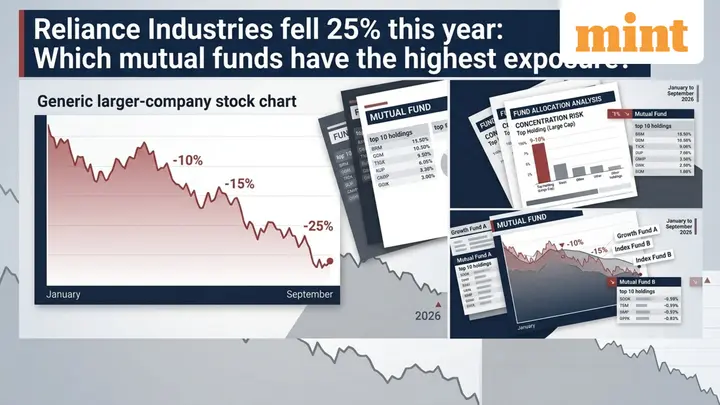
Mutual fund returns are influenced by the performance of the stocks held by the schemes. Reliance Industries Limited (RIL), India’s largest company by market capitalisation, is the latest stock in focus after its share price fell nearly 25% so far this year.
According to the NSE website, Reliance's share price is down 24.98% in 2026 as of 29 September. The sharp fall in RIL can have a meaningful impact on mutual fund schemes that have a high exposure to the stock.
Original Article
Published on Livemint
Frequently Asked Questions
What is this article about?
This is a results news update from Livemint, published on 29 September 2026.
Is this news positive or negative for markets?
TopFund's automated sentiment analysis reads this article as neutral in tone, based on the language used in the report. This is a general signal, not investment advice.
Where can I read the full article?
The full article is available at the original source, Livemint — see the "Read Original Article" link on this page.