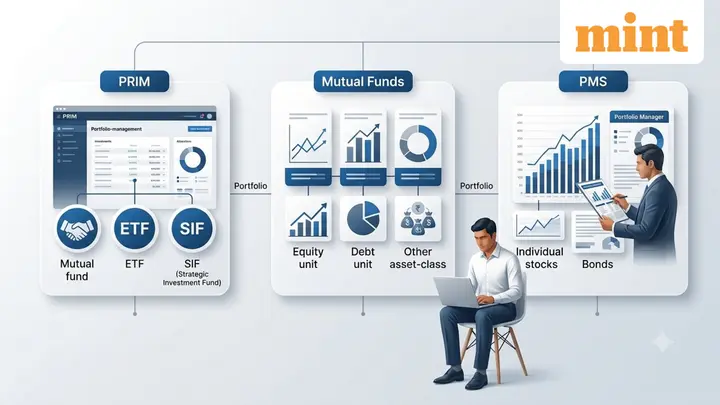
PRIM vs mutual funds vs PMS: Experts explain how they differ on portfolio structure, costs, taxation and suitability
AI Summary
The introduction of the PRIM route by SEBI represents a significant shift in how retail investors can access professionally managed portfolios, potentially democratizing investment management for those with lower capital thresholds. With a minimum investment of ₹25 lakh, PRIM offers a more tailored approach compared to traditional mutual funds, which could attract investors seeking personalized strategies without the higher entry point of PMS. This regulatory change may lead to increased competition among portfolio managers and mutual fund houses, ultimately benefiting investors through better services and potentially lower costs.
SEBI has approved the proposal to introduce the Securities and Exchange Board of India (Portfolio Managers) Regulations, 2026, replacing the existing PMS Regulations, 2020.
The new framework also introduces the Portfolio Managers Route for Investing in Mutual Fund units (PRIM), a route through which investors can get a professionally managed portfolio of mutual funds, SIFs and ETFs.
Original Article
Published on Livemint
Frequently Asked Questions
What is this article about?
This is a results news update from Livemint, published on 25 September 2026.
Is this news positive or negative for markets?
TopFund's automated sentiment analysis reads this article as neutral in tone, based on the language used in the report. This is a general signal, not investment advice.
Where can I read the full article?
The full article is available at the original source, Livemint — see the "Read Original Article" link on this page.