Life-cycle mutual funds vs DIY portfolio: Automate investing or manage it yourself for 30 years—what experts suggest
AI Summary
Investors should carefully consider their investment strategy between life-cycle funds and DIY portfolios, especially given the regulatory constraints and varying glide paths of life-cycle funds. While life-cycle funds offer simplicity and automatic rebalancing, they may not suit all investors, particularly those who prefer a hands-on approach to asset allocation. The current offerings in the market, especially from major AMCs, indicate a growing trend towards structured long-term investing, which could appeal to retail investors looking for a streamlined solution for retirement or children's education savings.
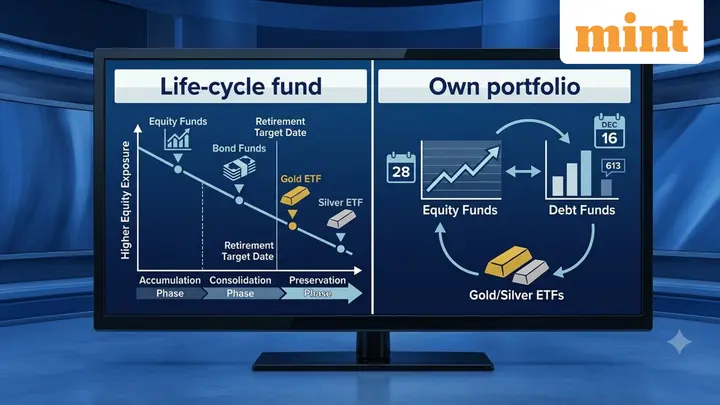
When investing for long-term goals such as retirement or a child’s future, you have two options: choose a life-cycle fund that automatically changes its asset allocation over time, or create your own do-it-yourself (DIY) portfolio of equity or debt funds and gold or silver ETFs.
Life-cycle funds follow a predetermined glide path, gradually changing the asset mix as the goal approaches. However, a self-built portfolio gives investors greater control over their asset allocation. Here's what experts have to say.
Original Article
Published on Livemint
Frequently Asked Questions
What is this article about?
This is a results news update from Livemint, published on 30 September 2026.
Is this news positive or negative for markets?
TopFund's automated sentiment analysis reads this article as neutral in tone, based on the language used in the report. This is a general signal, not investment advice.
Where can I read the full article?
The full article is available at the original source, Livemint — see the "Read Original Article" link on this page.