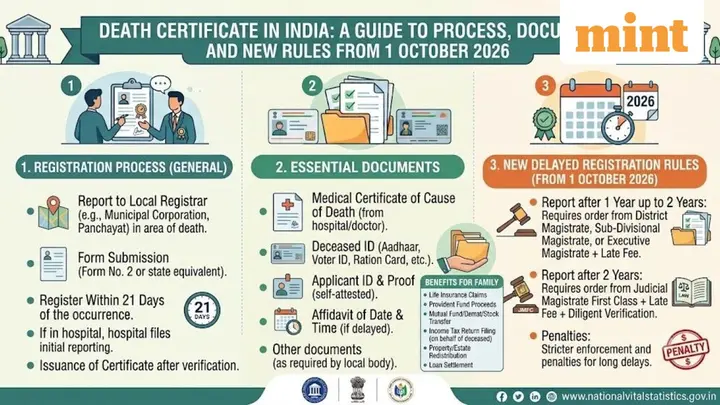
Death certificate in India: How to register, documents required and what changes for delayed registration from 1 Oct
AI Summary
The stricter rules on delayed death registration could have significant implications for families managing the financial affairs of deceased relatives. Investors should be aware that delays in obtaining death certificates may hinder access to life insurance claims, mutual funds, and other financial assets, potentially impacting liquidity and inheritance planning. As the regulatory landscape evolves, it may also prompt financial institutions to enhance their processes for handling claims and estate distributions, creating a more streamlined experience for beneficiaries.
A death certificate is an official record of an individual’s death. It is an extremely important document for the family to obtain after the demise of a near and dear one. The registration of deaths is mandatory under the Registration of Births and Deaths Act, 1969.
For families, this document is also critical for personal finances, as legal heirs of an individual may need it to claim life insurance, provident fund, mutual fund proceeds, demat and stock holdings, and to file the deceased's income tax returns, among other key matters.
Original Article
Published on Livemint
Frequently Asked Questions
What is this article about?
This is a results news update from Livemint, published on 25 September 2026.
Is this news positive or negative for markets?
TopFund's automated sentiment analysis reads this article as neutral in tone, based on the language used in the report. This is a general signal, not investment advice.
Where can I read the full article?
The full article is available at the original source, Livemint — see the "Read Original Article" link on this page.